Human trafficking is not a new issue for the International Council of Jewish Women. ICJW was founded in the 19th century by national women’s organizations uniting to fight this problem, and we are continuing their legacy.
In the late 1890s and early 1900s, American and German Jewish women grew alarmed by reports of young Jewish girls lured from their towns and villages in Eastern Europe with promises of respectable jobs abroad, only to find themselves trapped in forced prostitution in distant cities. Seeking escape from severe poverty and violent pogroms, these women were deceived by promises of respectable domestic work or marriage abroad. Instead, they fell victim to a highly organized human trafficking network that transported them across the Atlantic to distant cities.
The Polacas
One major destination for this network was Brazil, where European Jewish women trafficked to South America by criminals became known locally as “Polacas” – Polish women. Forced into prostitution, they found themselves trapped in a foreign land, stripped of their freedom and dignity, isolated and indebted to their traffickers. Movies have been made about the Polacas women, who were outcasts from the local Jewish community, but formed their own resilient communities. There are specific historical sections in graveyards such as the Inhaúma Cemetery in Rio de Janeiro, that preserve the memories of these women.
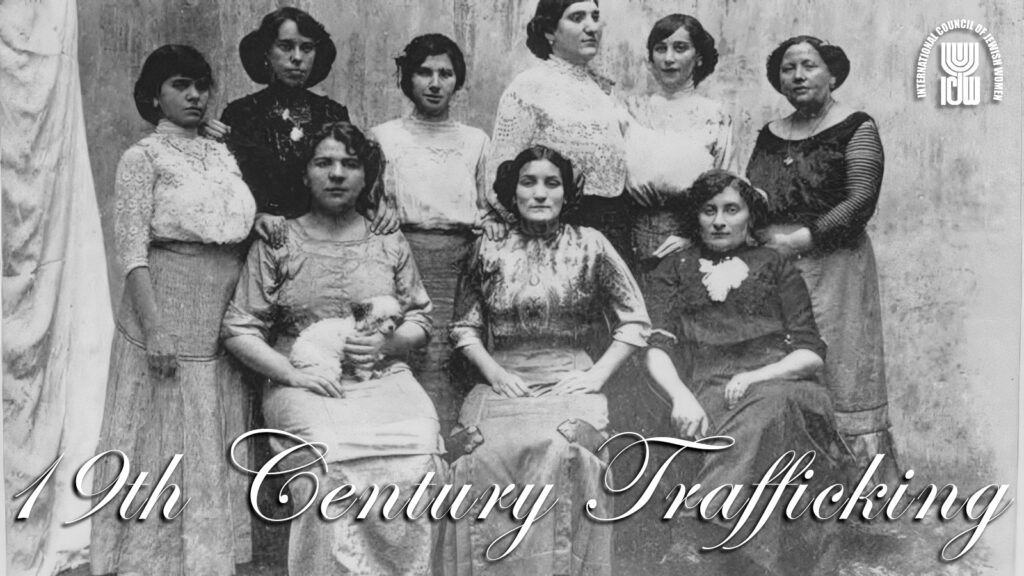
This specific crisis, referred to today as “white slavery”, spurred the birth of international Jewish women’s organizations. Alarmed by reports of exploitation in South America and other global destinations, Jewish women’s organizations in the United States, Germany, and England realized that a coordinated, global response was necessary to dismantle these trafficking rings. The International Council of Jewish Women (ICJW) grew directly out of this urgent movement, founded by women determined to protect vulnerable girls, intercept traffickers at ports, and offer asylum to survivors.
More than a century later, the nature of exploitation has evolved, but the underlying vulnerabilities remain the same. The ICJW continues to honor its founding legacy by actively combating modern human trafficking, proving that while the historical era of the polacas has passed, the global fight for the safety and dignity of women is unfortunately far from finished.
21st Century Trafficking – ICJW’s Ongoing War on Modern Trafficking
More than a century later, the ICJW continues this work. Sara Winkowski, ICJW’s representative to the UN NGO Committee on Stop Trafficking in Persons, notes that trafficking remains a major global human rights and security challenge. Despite improved law enforcement coordination and victim identification, the scale and sophistication of modern networks present immense obstacles. The ICJW honors its founding legacy by monitoring and actively advocating by sharing with our network important information to fight against trafficking.
Global efforts have made clear progress through increased cross-border cooperation. Agencies like INTERPOL have expanded joint operations and arrests, while legislative reforms tied to the UN Palermo Protocol have pushed countries to sharpen legal definitions, raise penalties, and adopt victim-centered care. Furthermore, the UN Sustainable Development Goals have embedded anti-trafficking commitments into mainstream global policy, and the UN Office on Drugs and Crime now provides vital data to track shifting trafficking patterns.
Despite these advancements, criminal networks have modernized. While historical methods like fake job ads and false marriage offers persist, today’s traffickers leverage encrypted messaging, social media recruitment, and complex financial channels bypass traditional law enforcement monitoring. These adaptable networks easily exploit rising global vulnerabilities caused by poverty, conflict, displacement, and climate-related disruptions, turning desperate situations into traps.
The challenge remains immense as many areas face weakened institutional capacity and political will to pursue traffickers. Additionally, survivors frequently encounter a secondary crisis after escaping exploitation. Chronic underfunding leaves shelters, legal aid programs, and reintegration services struggling to provide the essential resources survivors need to rebuild their lives.
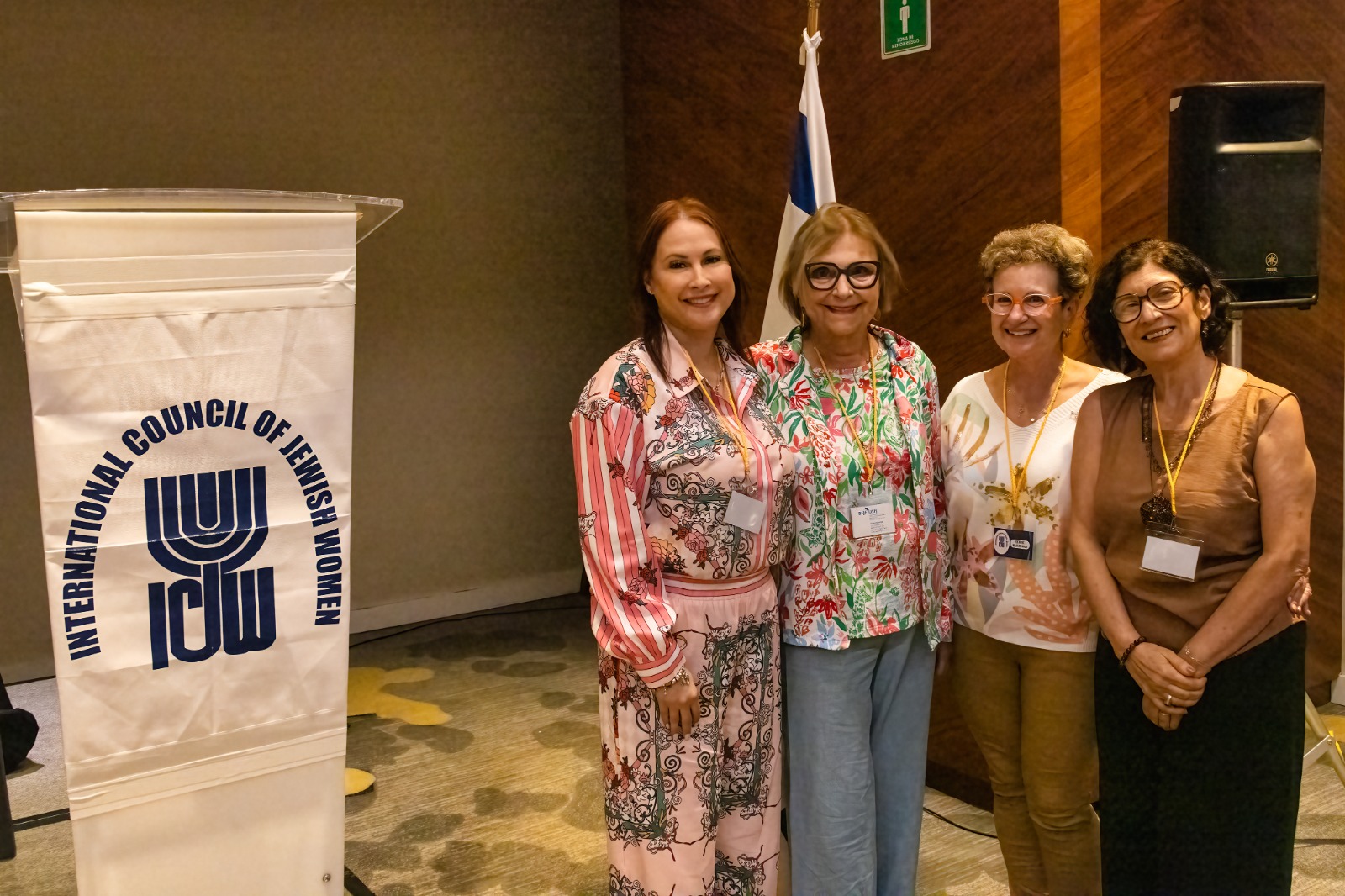
For an organization founded specifically to protect Jewish girls and women from exploitation, the through-line from 1900 to today is direct. The Jewish communal instinct that built rescue shelters at European ports and railway stations more than a century ago is the same instinct that drives ICJW’s affiliates – now representing 36 Jewish women’s organizations across 34 countries – treat trafficking as a human rights violation that demands ongoing advocacy at the United Nations and in their own communities.
That history also carries a lesson about urgency. The founders of this movement did not wait for trafficking to become someone else’s problem to solve. They organized, they built infrastructure, and they kept at it for decades, because the threat to vulnerable women and girls did not disappear after a year or even a generation.
That is why ICJW is still in this fight, and involved in the UN NGO Committee to Stop Trafficking in Persons, to make sure this issue stays squarely on the international agenda. Because a hundred years of progress is not the same thing as a hundred years of victory.
World Day against Trafficking in Persons – ICJW Joins the Blue Heart Campaign
July 30 has been designated by the UN General Assembly as the World Day against Trafficking in Persons, to raise awareness of victims’ situations and to push for the protection of their rights. ICJW and its 36 affiliates in 34 countries will be joining the UN Blue Heart Campaign, and encouraging Jewish women around the world to look out for signs of trafficking.
Click here to find out more and get involved.