Evelyn Askolovitch, Chair of ICJW’s Standing Committee on Antisemitism and Racism, submitted this sobering report on antisemitism in countries throughout Europe, and Lucette Pilcer reports on the European Commission’s Forum on Combating Antisemitism and Fostering Jewish Life in April 2025.
Antisemitism has exploded across the globe since the horrific events of October 7, 2023. While initial sympathy for Israeli victims was widespread, this quickly transformed into fierce solidarity with the Gazan population as the Israeli military response intensified. Unfortunately, this has led to a dangerous conflation of Israelis with Jews worldwide, triggering a surge in antisemitism across continents—from Australia and the Americas to Eastern and Western Europe.
This report examines how antisemitism, disguised as solidarity with Palestinians, has revived the pure hatred we believed had vanished after the Holocaust.
Eastern Europe: Mixed Progress and Persistent Challenges
Bulgaria has taken decisive action under the leadership of Dr. Alina Levi, the new Chairwoman of “Jews in Bulgaria Shalom.” She successfully secured government sanctions against the far-right party leader for hate speech against Jews, particularly on social media platforms.
Austria faces renewed concerns as the extreme-right party has returned to power—a troubling development given the historical association between extreme-right movements and Nazi ideology during World War II and the Holocaust.
Poland has chosen to focus on positive remembrance, establishing a National Day of Remembrance for Poles who saved Jews during German occupation. This initiative aims to honor those who risked their lives to protect Jewish communities.
Western Europe: Varying Responses to Rising Hatred
Germany has shown strong leadership in combating antisemitism. Julia Kloeckner, the new President of the Bundestag, declared unequivocally that “Antisemitism is not socially acceptable, not tolerable and not excusable.” However, attacks against Jews in daily life continue to increase despite this clear stance.
UK: The British government is addressing both antisemitism and anti-Muslim hatred through new protective measures for places of worship—synagogues, mosques, and churches—while granting additional powers to police forces.
Netherlands: Following attacks on Israeli supporters in Amsterdam, the Dutch government has implemented a new antisemitism combat plan, allocating 4.5 million euros annually to protect Jewish institutions and synagogues. The Minister of Justice acknowledges that antisemitism has indeed grown, with particular concerns about violence in sports stadiums and the “glorification of terrorism” during football matches.
Belgium presents a unique case study of denial and misconceptions. With approximately 30,000 Jews in the country, many Belgian citizens vastly overestimate Jewish influence and presence. The media provided limited coverage of the October 7th Hamas attacks and largely ignored terrorist acts committed in Brussels in the name of the Islamic State, reflecting a broader denial about Islamic terrorism.
In January 2025, Belgian universities sent an open letter signed by 7,000 staff and students demanding an end to academic collaborations with Israeli institutions. Perhaps most concerning, polling reveals that half of Belgian Muslims believe Jews are responsible for economic crises, while 59% agree that “Jews are doing to Palestinians what Germans did to them.”
Scandinavia: A Tale of Two Approaches
Denmark has demonstrated remarkable unity, with parliament unanimously adopting a comprehensive plan against antisemitism. All political parties have affirmed that “Jewish life is a living part of Denmark’s future.”
Norway presents a more troubling picture. The Jewish community faces antisemitism even within healthcare settings, with Jews afraid to seek medical treatment and healthcare workers hiding their Jewish identity. Disturbingly, Norway remains the only Western country that has not recognized Hamas as a terrorist organization. While the Minister of Health has issued statements affirming that all citizens are entitled to healthcare regardless of religion, the underlying problems persist.
Europe’s Largest Jewish Community Under Siege
France, home to Europe’s largest Jewish population and largest Muslim population, faces the most complex antisemitism crisis. The situation has deteriorated dramatically since the Israel-Hamas war began, manifesting in two primary ways:
- Direct Attacks:
Islamists have targeted Jewish schools, individuals, rabbis, and schoolchildren. During the March 8th women’s solidarity march, Jewish women were excluded for being labeled “Zionists and fascists.”
- Political Antisemitism:
The extreme-left party La France Insoumise (LFI) has incorporated antisemitism into its platform. Its leader openly opposes Israel, refuses to recognize Hamas as a terrorist organization, and has characterized the October 7th attacks as “an action to free Palestine.” The party features leaders of Muslim origin close to prominent positions, attracting significant Muslim electoral support.
- A Disturbing Political Realignment
Most troubling is the emergence of antisemitic propaganda reminiscent of Holocaust-era materials—posters depicting Jews with exaggerated features and claims that “power is in the hands of the Jews.” This has created a paradoxical situation where the extreme-right party, historically antisemitic but now rebranded, positions itself as the sole defender of Jewish interests.
This was evident at the March 28, 2025 Conference on Antisemitism in Israel, where Renouveau National was the only French party invited. Their president acknowledged that the party’s founder had been condemned for antisemitic statements but claimed he “was not really an antisemite.”
- Hope Amid Darkness
Despite these challenges, some positive developments offer hope. Women’s organizations in France and elsewhere are bringing together Jewish, Muslim, and Christian women to call for peace, demonstrating that interfaith cooperation remains possible.
Conclusion
The surge in antisemitism across Europe since October 7th represents a return to hatred many believed had been relegated to history. While some countries have responded with decisive action and clear moral leadership, others struggle with denial, political exploitation, and inadequate responses.
The Jewish communities of Europe face an impossible choice: fight the rising tide of hatred or seek safety elsewhere, often in Israel. The international community must recognize that antisemitism threatens not only Jewish communities but the fundamental values of democracy and human dignity that underpin European civilization.
European Forum on Antisemitism
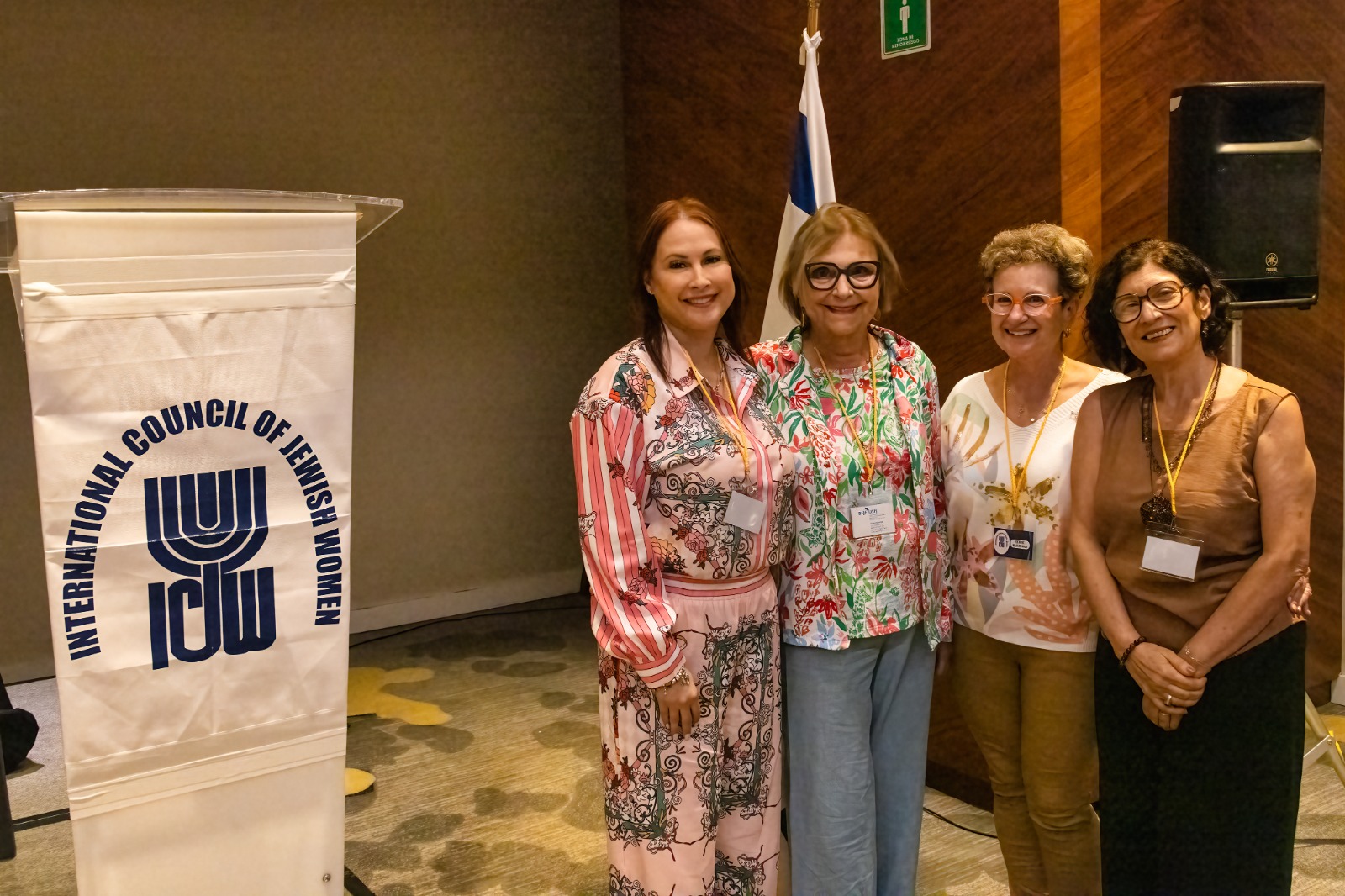
Lucette Pilcer reports on the European Commission’s Forum on Combating Antisemitism and Fostering Jewish Life, which she attended on 1-2 April, 2025.
This being the second Forum after the one held in Nov. 2022, I noticed far more participants – approximately 250, from all over Europe: there were more men this time and a few Muslims. The world has changed since October 7th 2023.
Every speaker gave a negative report of his country. But 23 countries have adopted national means safeguarding Jewish life, and in November 2024 there was a first report of prosecution against antisemitic actions and online messages. There is a difference between Western and Central European countries, with the latter feeling loneliness, exclusion – described as “going back to a ghetto.” We need to build bridges.
My first workshop was about the rise of online antisemitism. I appreciated meeting an Australian gentleman who manages the Online Hate Prevention Institute, who confirms that Israel-related antisemitism is now higher than ever. There is plenty of serious antisemitism on line, interaction with extremists, plus humour designed to propagate messages to reach many readers, which all comes down to the erosion of democracy.
France and the U.K. tops the chart for antisemitism, with 61% of survey respondents mentioning a Jewish conspiracy, and 40% of school-age youngsters declaring that they would not want a Jewish friend. Traditional and Israel-related antisemitism rates are now higher than ever. Holocaust-related messages and incitement to violence are stable and fewer.
There is a need for educational material to include Holocaust education, civil education, sharing of data, and visits to communities. The European Commission publishes information on funding opportunities. This Forum is meant to translate ideas for the future into actions, without excuses for October 7 and its consequences. Europe is THE place to create a platform helping to reduce hostility.